Sunday, July 29, 2012

this is Darlene.  I'm in DR Congo for a bit filling in for a colleague.  Things are pretty heated way on the other side of the country, but pretty much calm here in Kinshasa (save some small-scale protests against police actions to clear street vendors--more on that in another post).  

While Kinshasa is definitely not my favorite place to be posted in the world, it has a few things going for it:


1. A five-star hotel - The Grand Hotel - where I'm staying.  It's a bit of a mish-mash, this one.  My room is 1960s style, musty, with an ash tray on the bedside table and a bathroom sink that isn't level, so water accumulates behind the faucet.  But it has a lovely view of the Congo River and the pool.  The elevators have that fancy card technology where you have to swipe your card to punch in your floor number.  It works about 75 percent of the time.  The lobby is very beautiful, if perpetually overpopulated with men in suits sitting or standing, waiting for something or another.  And it certainly seems the place for high-class Congolese folks dressed to the nines to see and be seen.  I perpetually feel underdressed, especially at breakfast. 

2.  High fashion/couture - As mentioned above, Kinshasa and its sister city across the river have a reputation for fashion.  And not just any fashion, but seriously expensive duds.  The article I've linked is only about men, but women are definitely in on the couture as well, and I don't know if I've ever been around such a concentration of 5-inch heels, fishnets, and short skirts among the young ones, and long, flowing, beautiful drapes in every color imaginable among the more sensible, older crowd.

3.  The Congo River - a beautiful, slow-moving river separating Democratic Republic of the Congo from the Republic of the Congo.  Don't ask me how they decided which one got dibs on the adjective "democratic." (I've often wondered if using the word "democratic" in your country title actually is a cover for just the opposite).  In any case, I had some adventures on the river last time I was here, including our motorboat becoming a paddleboat for a considerable amount of time after running out of gas.  Wish I had pictures to share.  

4.  Expensive restaurants - Okay, this isn't necessarily a positive thing (unless the food is deserving of the expense).  But it is quite remarkable.  I can easily drop $45 for a single meal, just for me, here, without any special drinks or dessert.  Wowza.  

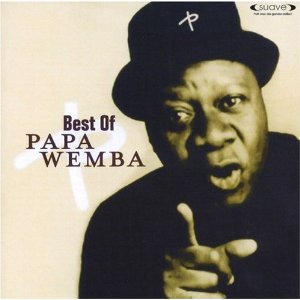
5.  Live music - I think one of the things I'm paying for during all these meals is the piano player, singer, and/or live band providing entertainment while I cut into my fish or whatever.  There is a lovely culture of live music here, which I really appreciate.  Last night, I went with co-workers to see Papa Wemba in concert -- he's quite an icon here in DRC, and I feel privileged to have been able to hear (and see) him in concert.  Papa Wemba is very influential in soukous music, or Congolese rumba, and he's also quite a performer--in his sixties, he was still dancing .  There were two bands playing before he graced us with us with his presence, and by the time he did (11:15 p.m.) we were pretty tired, but it was worth it.


Of course, Kinshasa also faces a number of serious challenges.  I will try to write about those another time.  For now, let yourself bask in the fantastic-ness of this crazy high fashion:


Saturday, July 28, 2012

I miss

Who went here

I distract myself with

and

and


Which I should not be eating because today my stomach has


Which prevented me from seeing


Time for

Friday, July 27, 2012


Would anyone like to buy this pot? It's 1000 shillings (about 12 USD) and is handmade by a small income generating project in Nairobi. The group that organized this business is not official or anything, but the people involved seek to help people who were formerly in conflict and help them find peace through working in a business together.  This business makes pots.

Already they have their wares sold in one supermarket nearby. Supposedly, a larger grocery chain called Tuskys is interested in ordering 9000 (or was it 900) of these. Unfortunately, since the current method of forging the pots takes multiple painstaking steps (they create the mold by hand), and since the final product is not always worthy of being sold (see holes in photo below), the business cannot fill such a large order.

However, if they could get a mold they could make pots much faster. The lead on this project even says that with one mold they could fill an order from Tuskys. They say that one mold would cost around 100,000 shillings (about 1204 USD).

All of the pots are made from aluminum that the workers (currently a total of 3) find on the side of the road. They smelt the aluminum over a charcoal fire that is intensified by an air blower at the base of the coals. Once the aluminum melts they pour the liquid metal into the handmade molds, after just a short while they are able to pull out a newly formed pot.

Seeing the project was simultaneously uplifting and disheartening. Their process is quite clever, all the way from reusing discarded metal to the handmade molds to the way they polish the rough pots that come from the mold. But it is disheartening all the same, as the people strongly desire to have a profitable business to feed their kids, pull themselves from poverty, and to gain the feeling of confidence one has when steadily employed. Yet the business is to make pots, and once you have a pot in their neighborhood you have a pot and probably aren't going to buy another any time soon. And even if they got a mold, they did not seem to have a ton of scrap aluminum on hand. Would they be able to find enough to make 9000 (900?) pots for Tuskys?

There are pros and cons to the idea, of course. And I hope it works. The people were certainly putting their whole effort into the business. If you have any suggestions for them let me know. Or, if you want a pot, you can choose from the ones below and place your order with me.

Thursday, July 26, 2012

The Nile River, Jinja, Uganda

Wednesday, July 25, 2012

Guest Post: The Taste that Stays with Me


Travis Barnwell, a dear friend, Christian brother, and former roommate, has been in Kenya with us from day one. Like me, he has been working for JRS, though in a different neighborhood. It is a real blessing to be able to talk through things we are seeing and experiencing on the ground, encouraging each other spiritually, and brainstorming programmatic steps together.

Shortly before the actual World Refugee Day, Travis was explaining his thoughts on hearing a Bishop speak about how we are all refugees, trying to find our way back home. Travis' words were engrossing and made us wish for more thoughts on the subject. We asked him to write a guest post on our blog and what followed were weeks of cajoling, prompting, and begging, though never demanding. Eventually, we lost hope. Yet it turned out that people from Travis' small group from church were also cajoling, prompting, begging, and I think demanding.

So here, without further ado, is a guest post from Travis, where he explains in further detail the conclusions he is drawing from his experiences with JRS:

The first thing that comes to mind is the idea of helplessness. It’s a trait I get to learn more about from the folks I hang around in Eastleigh who are apt to wear it like a declarative adolescent t-shirt such as “Bite me!” or  “You suck!”, but it’s also a trait I am discovering more and more to appreciate sharing with them. The group of minority tribe Somali men that I meet with once a week seems to have every right to broadcast their feelings of helplessness. They get targeted by majority tribe Somali aristocrats to be kidnapped and shipped to Somalia to fight for Al Shabaab, or else tortured and killed. After rushing to the hospital multiple times to have stab wounds patched up in the wake of narrowly escaping an attempted kidnapping, they should be displaying their feelings of helplessness. When they have to move their families from house to house to throw their attackers off their trail and cannot work for fear of being recognized, it is very appropriate that they proclaim their helplessness. Then finding that making multiple police reports and requests for investigations end in demands for a bribe they cannot afford to pay to get the protection they and their families desperately need – yep, helpless. 
My friend Nadine talks about how the value of being in a state of helplessness is that it can glaringly reveal the work that Jesus Christ is doing. I find that being around the helplessness of others reveals this, along with my own helplessness and vulnerability. This revelation not only makes the presence of Christ all the more glaring, but all the more tangible and desirable. I am daily convinced that any personal characteristic or skill that I possess to meet any of the needs I encounter is afforded me by a miraculously well placed birth, a more nutrient laden social environment than not, and a growing faith that has all been entirely gifted.

Despite owning all of this and feeling very well-outfitted for life this side of eternity, I am still just as helplessly vulnerable as the refugee who struggles to survive in Eastleigh. As one of the Kenya bishops recently pointed out at a World Refugee Day mass, we are all refugees if we consider our homeland to be in eternally, perpetual, and fully exposed proximity with the God who created us. Even our current access to this homeland through Christ is incomplete, a mere shadow, glimpse, and low quality pirated DVD picture of the land he will restore.  How very difficult it can be for someone like me to recognize this refugee status that I hold – and to be truly grateful for this daily bread of glimpsing the gospel message restore and re-create. I find that the contrast restoration and re-creation holds next to the desolation that surrounds me is provided by a position of exposure. Only the miraculous precedent of a present and living God allows me to experience this exposure with any transformative truth. Otherwise it is simply exposure.
To make a very long, drawn out thought into something inefficiently short: I find that Jesus Christ turns real ruin into real worship. And I’m really glad he does. I don’t like ruin and I can’t fake worship. Since I’m strangely drawn to ruin through social work and am discovering more about my own ruining, I’m easily filled with hurt and rage. Transformation is the most sustainable, most desirable treatment for these ailments in me, my “clients”, and the world that we share. I believe ruin draws me because where it is, transformation can be also.

Tuesday, July 24, 2012

the mighty Nile

What a weekend!  We had a blast rafting the Nile and enjoyed our relaxing time in Jinja.  I (Darlene) am getting ready to travel to Congo for a bit and so this post will be short.  But we thought you might enjoy pictures of the crazy waves we were surfing (and swimming) in.  

Here we are heading for a big set of rapids:

And here we are about to go for a swim a bit later in the day (David is fully in the water in the front of the boat.  You can barely see the top of my paddle and I'm pretty much in the water, too).  

We couldn't believe how long we were swimming -- the Nile is nothing like what we rafted before in West Virginia -- but the volume of water means that it was even safer (fewer big rocks to hit/get trapped by).  Fun times. :)  

Monday, July 23, 2012

I asked the taxi driver from Entebbe to Kampala what he thought of Ugandan politics.  He mentioned how the economy is bad and how the president is not helping. I asked him if things were better now than they were under Amin in the past. His answer? Oh no, Amin did many good things. He built roads, he built hospitals, many things that are still good today came from the Amin era. I asked him if he had seen the movie "The Last King of Scotland."  I told him that I think that movie made everyone in the West see the rule of Amin as the rule of a madman. He just laughed and talked of how some Ugandans would welcome Amin over the current president of Yoweri Museveni. Personally, I do not know what is what in this situation. I could not look at the taxi driver and counter-argue him by saying, What!?!? Didn't you see what Forest Whitaker did in scene 7?

We hear one thing and someone else hears and sees another. It makes me want to get in a dugout canoe and go fishing to rest my brain, like these folks on the Nile River where we stayed in Jinja.


This sign also made us want to rest our brains.