Tuesday, August 14, 2012
Monday, August 13, 2012
David and I are getting excited about our Mt. Kenya trek. There's a lot to do between now and then for both of us: wrap up things at work, have dinners with friends, exercise/train adequately, eat right, pack...the list goes on. A week from tomorrow morning, we'll be beginning our journey. But for now, we're still getting things set like the route we're taking and hiring our guides.
It's looking like we're settling on a longer trek to allow ourselves to enjoy the scenery and get acclimatized. The Sirimon route toward the northwest is supposed to be very gradual, so that's our ascent route. We'll be coming down the Chogoria, which is supposed to be the most scenic. We are also hoping to do the orange route below, that allows you to circle all of the main peaks (including the one we're planning to summit as well as two others that require technical climbing).
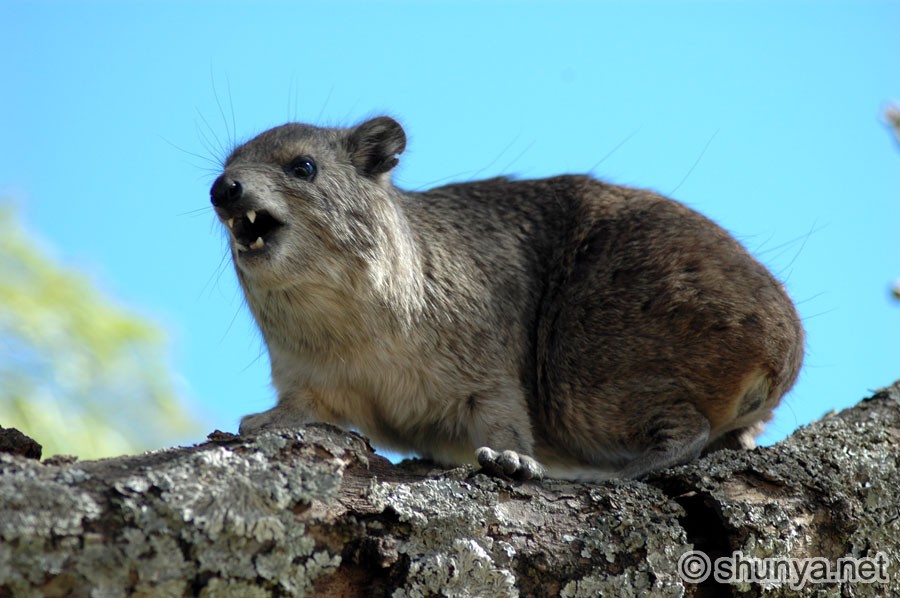
Apparently, the Sirimon route is also known for its abundant wildlife. We're hoping to see monkeys, antelopes, and even elephants (from a distance) on the lower slopes. One of the potential guides we've been talking with about the route says that "There is a high chance that we will be entertained by the rock hyrax." We're looking forward to The hyraX Factor, in which he'll perform Johnny Cash's never-released A Hyrax Named Sue.
| A hyrax performs "Vissi d'arte" from Puccini's opera Tosca on an early 2012 trek. |
We hope that we get to see the original Hyrax, instead of some wannabe stand-in.
Saturday, August 11, 2012
When Darlene and I go somewhere and meet other people, I always introduce her as my wife. Pretty obvious thing to do. In Kenya, however, I have had other men point out to me that in Kenya men prefer to not introduce themselves as married, and don't mention that they have a wife. This does not apply to all Kenyan relationships of course, but I have been surprised by the prevalence of such behavior in the circles I have run in.
For example, there seems to be a belief, particularly from women, that men are going to be fooling around and that is simply that. So when Darlene went to DRC for her nine day trip, I was asked by fellow staff members, so are you going to stay faithful? They asked this question with a mischievous look as if they were in on my little secret. Of course my answer was that I was going to stay faithful. I told them the only mango (the word our friends use meaning sweetheart) I was going to see while Darlene was away was Travis. They laughed and started a conversation about homosexuality.
When I tell people I am going to stay faithful there are followup questions, but do you ever wish you married someone else? Or are you comfortable with having just one wife? And my favorite, have you ever beaten your wife? To which I reply in the order they were asked, No, Yes, and She beats me. I cannot claim to know the reason these questions are asked. I do wonder, though, about the state of romantic relationships in Kenya, and whether the people who have asked me these questions ask out of experience. Sociologists, please book the next flight to Nairobi.
I bring this topic up today because Darlene and I have decided to climb Mt. Kenya (to a summit of over 16,000 feet baby!) for our time off before we leave. I emailed a potential guide telling him my wife and I have been working in Nairobi for the last couple of months and are interested in trekking to Point Lenana. The man responded with what a fully booked tour would include saying (exact text from email), fully board is ,what you have do is just walking and take photo and enjoy buy your wife all your girl friend. I don't know if he means "buy your wife all your girlfriend", or "buy your wife or your girlfriend." It's probably something more along the lines of "what you have to do is just walk and enjoy being with your wife or girlfriend."
But why the part about a girlfriend since I already told him I had a wife? Hopefully, if we do book him as our guide, he won't also charge us for my fictional girlfriend.
Friday, August 10, 2012
Not to rub it in...(Olympics spoiler alert!)
...but we're pretty thankful for the Olympics coverage here. Not only do we actually have a TV in this apartment as opposed to our DC home, but we also get to watch most of the best events live after work. We have three channels showing the Olympics (called gold, silver, and bronze), so when one channel is showing something we're not super interested in, we can just switch to the next one.
We've been hearing some complaints about NBC's coverage back in the States, particularly about the announcers. I think that's what we've been most impressed with--the announcers here are actually quite articulate and we learn a lot about the rules of various sports that we didn't know before. And, in typical British fashion, they are quite droll, making comments about the competitors like "well, there is a man who is definitely here to get some experience" or "well, we know what will happen here..." or even, "he looks disappointed, and he should be!"
In terms of following the various athletes and teams, we're just looking for good competition and sportsmanship. In addition to cheering for Team USA (spoiler alert: we just watched the USA women's 4x100 team break the world record!), we also have been cheering for teams in Africa, and particularly East Africa. But not only is East Africa capturing our attention. David particularly enjoyed seeing a North Korean weight lifter who (from his memory) broke a world record during his competition. But what touched David was that the North Korean seemed genuinely excited about competing for himself and full of desire to engage with the spectators who came to love him as well, cheering loudly during each of his lifts. A few years ago, during the last World Cup, David felt bad for the North Korean soccer team who appeared to be uncomfortable on a world stage, desiring to get out of view as quickly as possible. But now, from a country kept in darkness for years, a country where you are taught that the supreme leader is the sole one to be praised and adored, now you have a North Korean weight lifter competing not just for his country, but also himself. It didn't appear to be pompous pride on display, but the liberating excitement of one reveling in their goodness. Long live the Olympics.
Here's a photo of our TV with live coverage of the 5000m women's event. Go East Africa!
Thursday, August 9, 2012
movie night
This is Darlene. While I was in DRC, I wrote most of a blog post one sleepless night. I'm finally coming back to it because it was something I want to remember.
-------------
Today was Parent's Day in DRC, which meant an official holiday and a day off work. I ended up working anyway, but at a slower pace involving a long, rambling meeting and working on my computer while watching the Olympics off and on. Good thing my day was relatively relaxed, because I ended staying out late--and then staying up late pondering what I had just experienced.
My colleague arrived back in Kinshasa today and invited me to movie night with his kids, saying that he was certain that the kids would want him to have a movie night as soon as he returned. I accepted the invitation heartily for the opportunity to get to know my colleague and his family better and to get out of the hotel. He promised to steer the movie selection in my favor (i.e. away from Texas Chainsaw Massacre). I was thankful, never ever really having cultivated a taste for horror flicks.
It is hard for me to sum up the feeling of being out-of-place, safe, happy, sad, and confused that mingled together during the evening. You see, his "family" is a large collection of children and young adults with physical disabilities. My limited French was enough to catch many of them calling him "ma pere" -- Dad. They were extremely happy to see him back and in good health. Several chided him for smoking a cigarette ("all of them are now doctors," he said).
Nearly all of them (and there were at least 50) presented themselves to him and to me, a few carried, most using braces, crutches, or other aids to walk towards us, and shook our hands in greeting. Some are resident in the house/office--undergoing rehabilitation, awaiting surgery, and/or learning to use their new equipment. Others were formerly the recipients of such work and are now working to help others through designing braces or guiding the new ones in their walking. We sat, talking and drinking sodas in an open-air courtyard while we waited for someone to fetch gas for the generator so that we could watch the movie. We sat along one wall of the compound/courtyard, while most everyone else sat along the opposite wall. One boy, deaf/mute, cried a good deal of the time, others paced back and forth practicing with their crutches, several of the young ones were sitting, watching us or keeping themselves occupied with each other or their mothers. Without being able to speak much of a language any of them could understand, I felt a bit useless at times. At one point I remember thinking to myself how silly it was for me to wear cropped pants for this venture; this I believe came to mind as dusk approached and the mosquitoes began swarming. Useless or no, I'd smile, try to cheer on those pacing, intermittently talk with my colleague, and listen as he spoke in Lingala with the older fellows. Lingala, as a matter of fact, as a Bantu language, has some similar words to Swahili, so there were some few words I could at least understand.
Have you ever been in a situation that is surreal--in which you wonder how you got to that place right there and how you could ever explain it to another person? And I don't mean surreal in a bad way. Just in a--I would have never expected or predicted that my life would bring me here to this moment--way. That's how I felt when we gradually piled into the room were the movie was being set up. Of course, as the guest of honor and the boss/dad, we had individual chairs in the back with a good view and a table for our beverages. Several benches surrounded us, and then in front were dozens of smaller children on the floor, all eagerly awaiting the movie. The room vaguely smelled of urine, but the odor didn't linger all that long. I smiled at the young fellow next to me and wished him a good evening au Francais. A giant smile and "bon soir" was returned to me.
I never expected to watch a South African-adapted opera with 50+ kids, 3 and up. I never expected that Carmen, an opera written in the mid-1800s, would be so translatable to a current-day township. I never thought so many of the kids would pay such close attention throughout the opera, not stirring, not losing attention or making noise, most of them not sleeping. (And I've never been more nervous that I would get bitten by mosquitoes.)
We watched another movie with Sean Connery in it before his James Bond days (something about leprechauns--look it up; it's a classic). Another stranger than fiction moment. I am very thankful to have been a welcomed intruder on this family movie night.
--------
I have a lot of thoughts about that night. It was capped off by a flat tire and a brief walk home through the streets of Kinshasa to my hotel (accompanied to the lobby, of course). But I think my overarching emotion, with the entire swirl that I experienced that night, was thankfulness. One of the "kids" that walked with me from the flat tire incident toward the hotel stood outside the lobby when we arrived. I had to coax the young fellow into the lobby while my colleague and I talked about logistics for the next day. I wanted to tell him that I had done nothing to deserve the privileges in which I live and breathe every day. And at the same time, that he should hold his head high, even in (and especially in) that crazy, high society place. Accomplishments are not all measured in dollars and fancy clothes, but in fact in many cases, in putting one foot in front of the other.
Wednesday, August 8, 2012
The following article comes from a recent JRS newsletter. Fr. Smith was saying goodbye to his time with JRS and I found it to be the thoughts of a man trying to understand the last 12 years of his life. Specifically, see what you think about the "moments" section and the "struggles" section.
Kenya: Late-night thoughts on leaving JRS
By Fr. Gary Smith SJ, Former Pastoral Coordinator, JRS Kakuma
Fr. Gary Smith SJ has dedicated 12 years of service to JRS. Here he shares some of the thoughts he wrote down in late June as he prepared to leave his most recent assignment with JRS.
“One never reaches home”, she said. “But where paths that have affinity for each other intersect, the whole world looks like home for a time”. (From Demian, by Herman Hesse)
On loss and blessing
We stood there, the three of us, on a dusty road in the Kakuma Refugee Camp in northern Kenya. I was with two Sudanese refugees, tall young men, Peter and Zachariah, leaders in one of the Catholic chapels in which I served. I told them that I would be leaving Kakuma and Africa soon – probably for good. As best as I could, I told them why. They absorbed the news thoughtfully. In their lives the notion of loss and blessing often come together. They told me that they knew I loved their people and that their people loved me, but they understood that this movement in my heart was strong and that my reasons for leaving were sound. In their eyes, all of this was of God. They felt my presence with them had been a blessing from God even as my absence will be a loss. It was one of those unforgettable conversations one has in life; an inner icon to which the heart must return periodically and contemplate.
Arrupe’s vision
In the late 1990s, while living in Portland, Oregon, I decided to move from ministry in the streets of the USA to the streets of the world. I pondered once again the vision of Fr. Pedro Arrupe SJ, Superior General of the Society of Jesus, the Jesuits. In the 1980s he decided to take the Jesuits in a new direction. It was this: that the Jesuits, in a vast, universal, full-speed-ahead move towards the poor, should embrace the cause of the refugees of the world. He wanted the Society of Jesus to commit itself to accompanying them in whatever way possible. The scope and implications of this proposal were breathtaking. But would Jesuits do it? Would it be possible to summon from the heart of the Society of Jesus, the skills and faith which could be systematically hurled into the breaches of human suffering synonymous with the flight and plight of refugees?
Arrupe never doubted it could be done. A way of proceeding was created: the organisation that was born would eventually be called the Jesuit Refugee Service (JRS). And then there is this: Arrupe knew that the Society of Jesus is healthiest, at its best, when it is with the poor, with the marginalised. JRS would take the Jesuits and its lay collaborators into the thick of poverty in the battle for the dignity and rights of refugees. With the poor, the Society of Jesus would discover once again what it longs to be, would uncover again its deepest desire: taking the risky march into the unknown to be with those who have – at least by the world’s standards – no power, no money and no beauty. In that tentative world, the Society of Jesus would follow, imitate and bet its life on the poor Christ.
Beginnings
By 1999, nearly 20 years after the Jesuits established JRS, the worldwide refugee numbers had not diminished, but increased by millions. I approached JRS. “Can you use me?” “We can; we need someone in East Africa”. I talked it over with my Provincial. “Go with my blessing” he said. I was in.
I started working with Sudanese refugees in the Rhino Refugee Camp, northern Uganda, on the West Nile, later moving to Adjumani and Palorinya Refugee Settlements, Uganda, again with Sudanese. From there I went to Makhado, South Africa, on the border of Zimbabwe, attending and serving Zimbabwean refugees. My most recent assignment has been with the JRS project at Kakuma Refugee Camp, Kenya, a camp containing refugees from several Eastern African and Horn of Africa countries: Sudan, South Sudan, Ethiopia, Somalia, Eritrea, Congo, Rwanda, Burundi, and Uganda among others. More than 90,000 people.
Twelve years have passed. Growth and life. Wear and tear. Success. Failure. I’ve entered unimaginable worlds of learning and love. In it all, I have discovered more deeply the heart of God working in me, in those around me and in the JRS mission. Seems like a wonderful discovery. It is.
Moments
In Uganda, in South Africa, in Kenya, in Sudan I’ve experienced things hard to believe.
I’ve seen destroyed huts and lifeless bodies in Pakelle, murdered by the Lord’s Resistance Army (LRA). Held the reassuring hand of 11-year-old Sudanese refugee, Regina, escorting me through the labyrinthine earthen streets of Kakuma. Wept at the humility of Zimbabwean refugees, offering their morning prayers of thanksgiving. Their sole possession: the clothes on their back.
I’ve watched Chameleons creeping among the burnt out buildings of Barituku. Shared with Somali students in Kakuma, of their Islamic faith and their flight from Somalia. Felt the fear of Nimule southern Sudanese as we heard the approaching drone of Antonov bombers.
I have known Jesuits – simply the best – who backed me, laughed with me, cried with me, believed in me. Seen thousands of armed Sudan People’s Liberation Army (SPLA) troops moving outside of Moyo. Witnessed babies born on the beds of pick-up trucks and beneath the gigantic leaves of Teak trees.
I’ve taught refugee catechists and rejoiced as they unlocked the mysteries of Faith to their people. Grasped the fingerless hands of begging lepers in the market place of Arua. Seen terror on the remembering faces of Rwandan, Burundian and Congolese women.
I’ve witnessed the spectacular dance of celebration by the ululating Dinka women of Miriye.
Gazed at the elephantine Baobab trees, guarding the road from Makhado to Zimbabwe. I remember the laughter of Atibuni and Asega in Rhino Camp, of Peninah in Kakuma, of Frido and Atimango in Adjumani, and of Thandi and the entire irrepressible JRS team in Makhado.
From dusk to dawn I’ve listened to inconsolable refugee mothers of Yoro mourning their lost children. Experienced the first malaria attack, an unyielding tsunami breaching my shores.
I’ve been consoled by the sunsets of Kakuma, the early morning mist rising off the Nile and the Southern Cross glittering in the Johannesburg nights. I’ve smelled the roses in a Nairobi morning and the earth after a South African rain. Turned my face into the warm winds of Kampala blowing off Lake Victoria. Listened to the night breezes moving through the Neem trees of Rhino Camp.
Deep in the bush, I’ve held malarial babies in my arms – hours away from death – and kissed them. Grasped the faith-filled hands of blind and crippled Yayo in Magburu as she said goodbye to me. Comforted Makhado refugee, Mandinyenya, weeping over news of his mother’s death in Zimbabwe.
I’ve celebrated Mass beneath trees in countless villages, in chapels and in small rooms; occasions filled with the transparent faith and passion that inhabits and powers the African Church.
From Johannesburg to Juba I’ve been captured by refugee children, whose happy greetings surely could be heard in the Kingdom of the Deaf and whose smiles could light up my dark night.
Each day I have been nourished by the faith and wisdom and hope and love of refugees. Each African morning – thousands of them – I awoke knowing that God waited for me. And desired me.
Many moments expressed; many beyond words: all way stations on the road towards what is true and good, and toward the One who authors the miracle of my life and whose mystery is beyond expression.
Struggles
I‘ve learned that JRS is not made up of a bunch of saints. It is an organisation that can bleed; it has its flaws and imperfections; its leaders struggle with the implementation of its principles and goals. It must gently listen to the impelling Spirit of God, and embrace change, and not fear mid-course adjustments. Its staff must regularly evaluate why they do what they do; JRS must help them nourish their spirituality; calling them more deeply to understanding the foundations of their accompaniment and service of and advocacy for refugees. Instinctively, JRS must always – always – be on the hunt for its roots and for Arrupe’s epiphany, driven by his sense of indignation. Something like this: There are people who are suffering and hurting and they are alone. This is wrong. They have the dignity of God’s children. We must be in solidarity with them. We must act.
Finding home
There is a rising, wrenching sadness in me, though it is clear, for personal reasons, that it is time to go. Leaving refugees is a difficult chalice to drink. But countering the sadness there is –as Peter and Zachariah would say – a blessing from God. I am like the person who ascends the mountain and looks back, with love, down at the country that has been traversed. From the top of the mountain the world looks so different; a person’s perspective changes in 12 years of daily, personal encounters with goodness. There is loss, but it walks hand in hand with blessing.
One never reaches home, but for a time, while living among the refugees, my heart always found a home.
Subscribe to:
Posts (Atom)